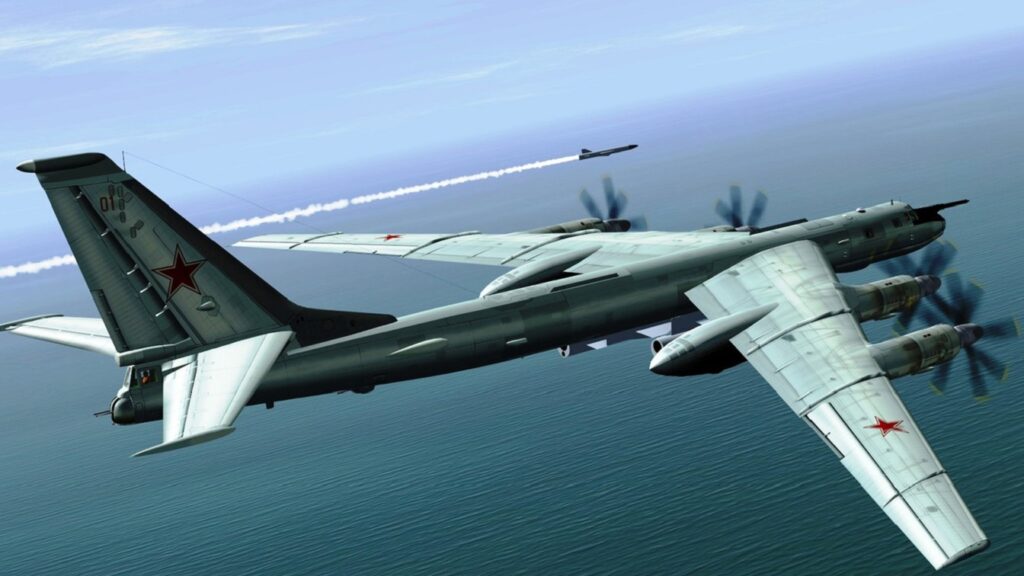
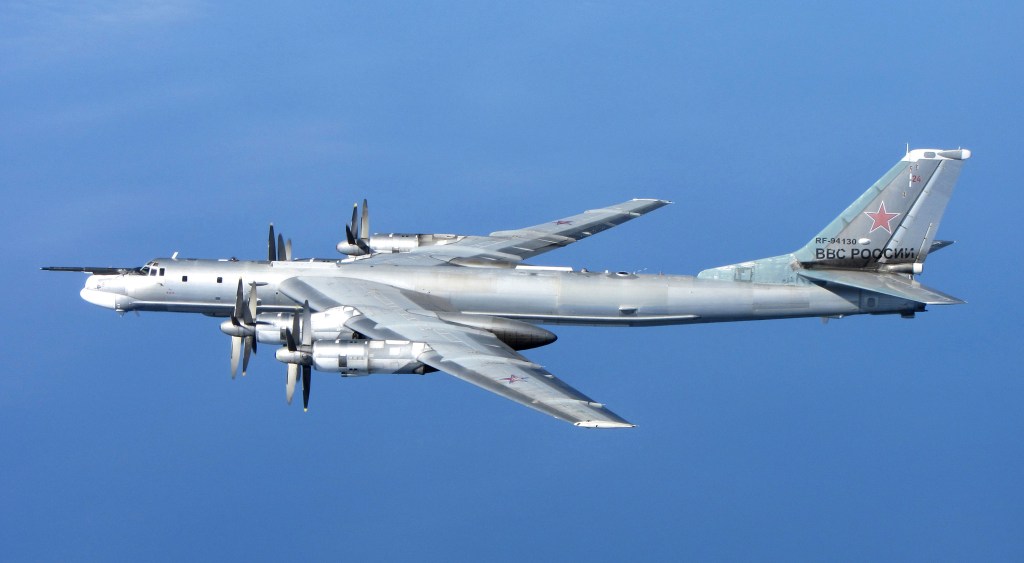
The former Soviet Union wanted a strategic bomber that could replicate the success of the US strategic bomber force during World War Two. The design brief was to build a bomber capable of flying 5000miles to be able to strike targets in the US whilst carrying a 12ton payload of nuclear bombs.
The Russian Bear, manufactured by Tupolev made its inaugural flight on 12th November 1952 and came into service with the Soviet Air Force & Soviet Navy in 1956, serving within the Soviet military until the collapse of the Soviet Union where the Bear was flown under the command of the Russian Air Force.
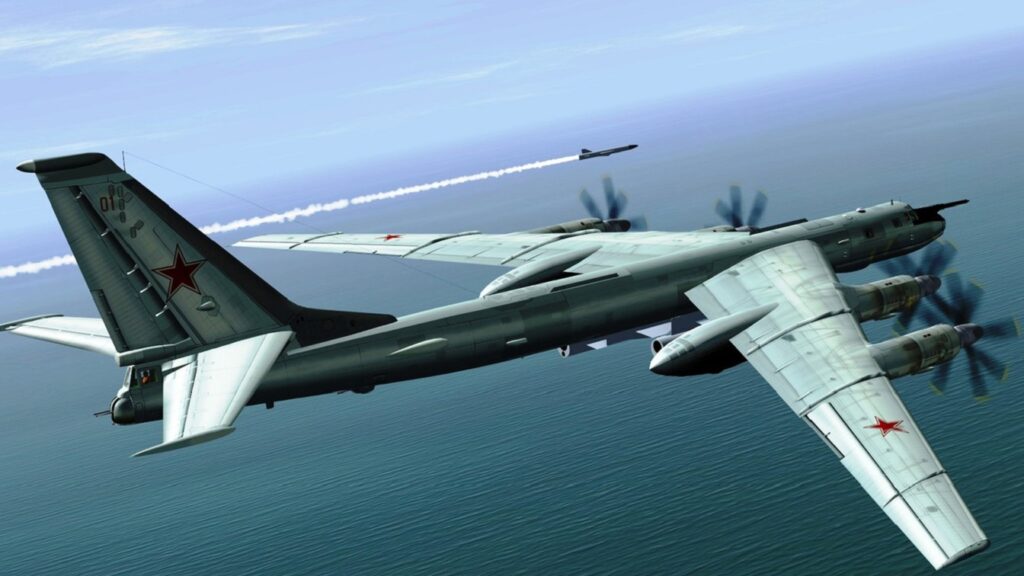
The Russian Bear has from the day it came into service with the Soviet Union became a symbol of Soviet strength, which Putin has made sure since coming into power as the Russian President, re-affirming Russia’s power and capability, regularly probing and testing NATO’s defences after he reinstated the Bear Patrols flying close to NATO members airspaces alerting their radar systems which still goes on today. Also in 2015 Russia’s intervention in Syria, in support of Syria’s leader Bashar al-Assad saw the TU-92 Russian Bear take part in striking rebel targets in Syria launching cruise missiles which was the first time the TU-92 had seen combat as a bomber.
For an aircraft that first came into service in 1956, still flying today shows testament to its design which presently doesn’t look like it will leave service till past 2040. Even in the 50s when the Bear came into service the use of prop engines as apposed to the jet engine seemed archaic, but the design of the propeller pain gave ability for the Bear to carry a heavy payload at speed and at the time of coming into service, it was one of the fastest prop engine aircraft with a speed of 500mph.
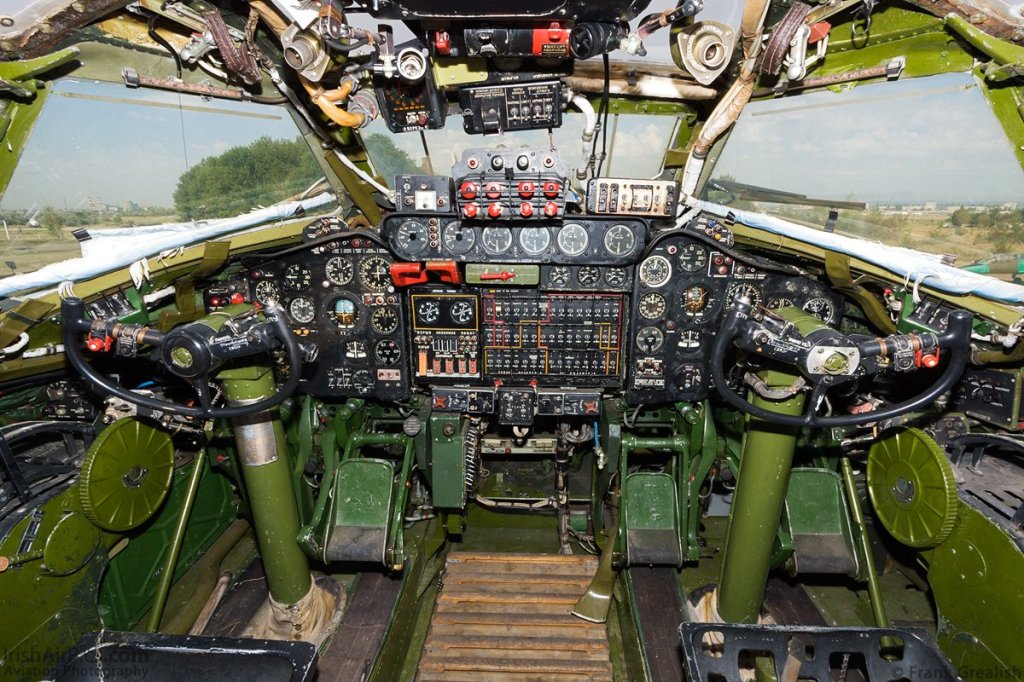
Originally the Bear was crewed by two pilots, two navigators and gunners manning 23mm cannons in the belly and tail along with a fixed gun in the front of the aircraft, but due to advancing technology, the guns became useless and later variants were only fitted with a tail gun.
The original design of the Bear was to allow it to fly long range as a nuclear strike delivery aircraft crossing the Arctic from the then Soviet Union to drop its nuclear payload onto targets in the US, but over time and advances in technology, the Bear has been repurposed to carry the long range KU-20 nuclear cruise missiles instead of its original bomb payload to address its vulnerability from surface to air and air to air missiles. The Bear would also be deployed to shadow US Carrier Groups and if there was any armed conflict in the future, the Bear would be used to launch attacks on the US Navy utilising its capability of long range flight without re-fueling.
The current Russian Bear in service today is the TU-95MS variant which was built from the 1980s to the 1990s, its range gives it the capability to reach not only the US, but Asia and of course Europe. Most recently the Russian Bear has been used in Russia’s invasion of Ukraine where the Bear was used in the initial assault on the country back in February 2022 as well as being used alongside the TU-160 strategic bombers, targeting runways in Ukraine.



 Military News Today
Leave a comment