
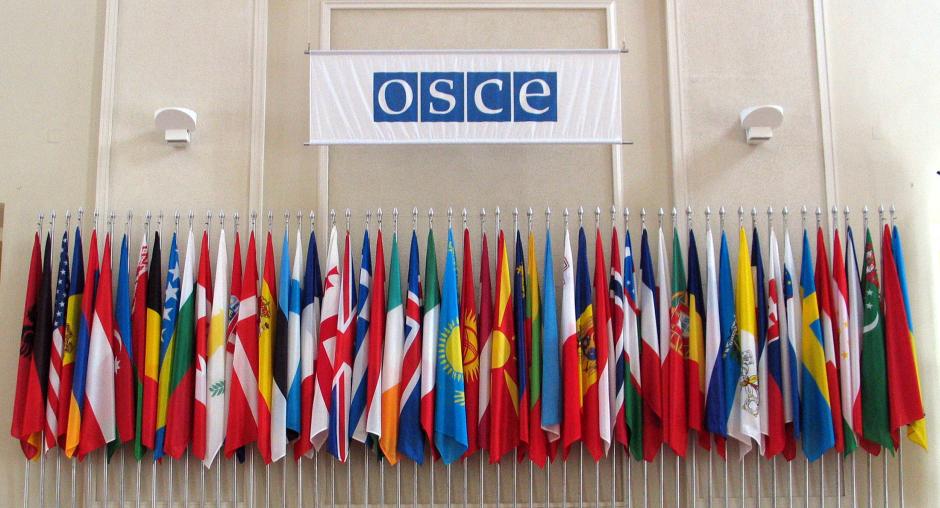
The OSCE (Organisation for Security and Co-operation in Europe) has a comprehensive approach to security that encompasses politico-military, economic and environmental, and human aspects. It therefore addresses a wide range of security-related concerns, including arms control, confidence- and security-building measures, human rights, national minorities, democratisation, policing strategies, counter-terrorism and economic and environmental activities. All 57 participating States enjoy equal status, and decisions are taken by consensus on a politically, but not legally binding basis.
On the ground
The work of the OSCE spans the globe, encompassing three continents – North America, Europe and Asia – and more than a billion people.
Field Operations
Most of the OSCE’s staff and resources are deployed in the OSCE’s field operations in South-Eastern Europe, Eastern Europe, the South Caucasus and Central Asia.
Institutions and Structures
The Organisation has a number of institutions and structures that help it implement its mandate. In addition, the OSCE Parliamentary Assembly brings together parliamentarians from all participating States.
Participating States and Partners for Co-operation
The Organisation comprises 57 participating States, 6 Mediterranean and 5 Asian Partners for Co-operation.



 Military News Today
Leave a comment