
Several publications recently reported that an F-35 lost to an F-16 in a mock combat exercise, but the truth is a little different…
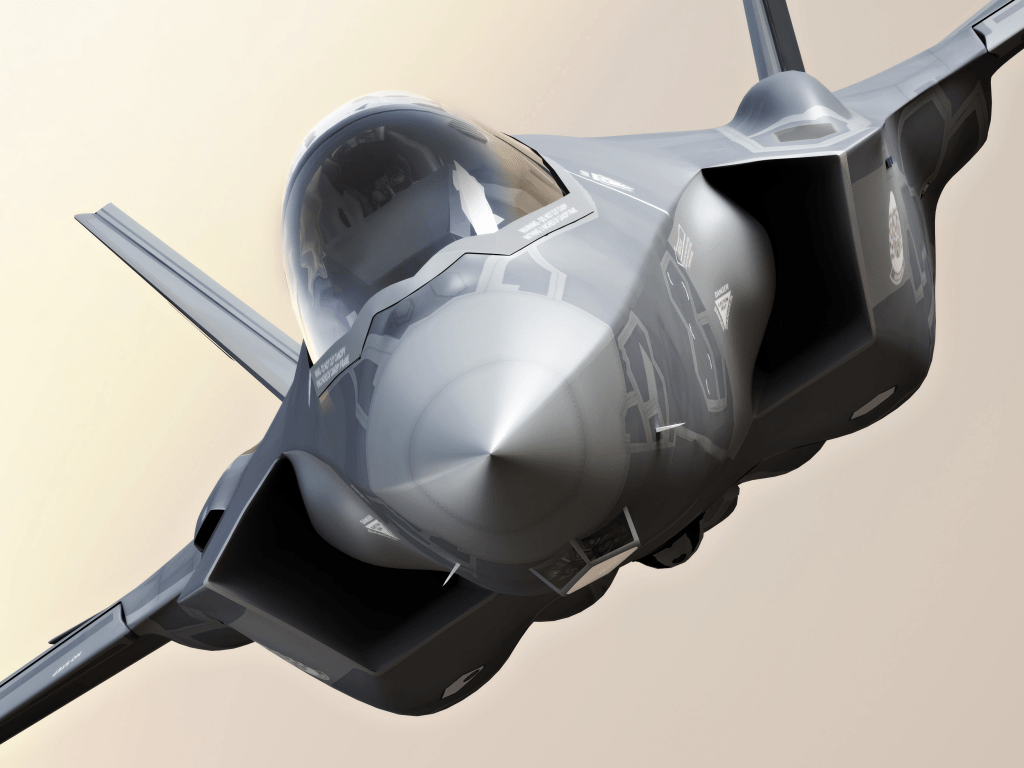
Many reading the recent article that appeared in several publications about the F-35 losing against an F-16 would have been shocked of the news, however, when diving deeper into the details we find there was more to the story.
The F-35 was actually an AF-2, this airframe is designed for flight testing, it’s designed to fly in certain restricted flight envelopes. It does not feature the majority of systems present in frontline aircraft.
The aircraft, due to it being a test aircraft, had also not had the software installed that is required to use the sensors and mission systems that would be used in combat. Additionally, ‘AF-2’ does not feature the radar-absorbent material coating that operational aircraft have.
Articles making the claim that the F-16 is superior cite tests performed earlier in the year to assess the flying qualities of the F-35 during within visual range combat and the F-16 involved was used as a visual reference to manoeuvre against.
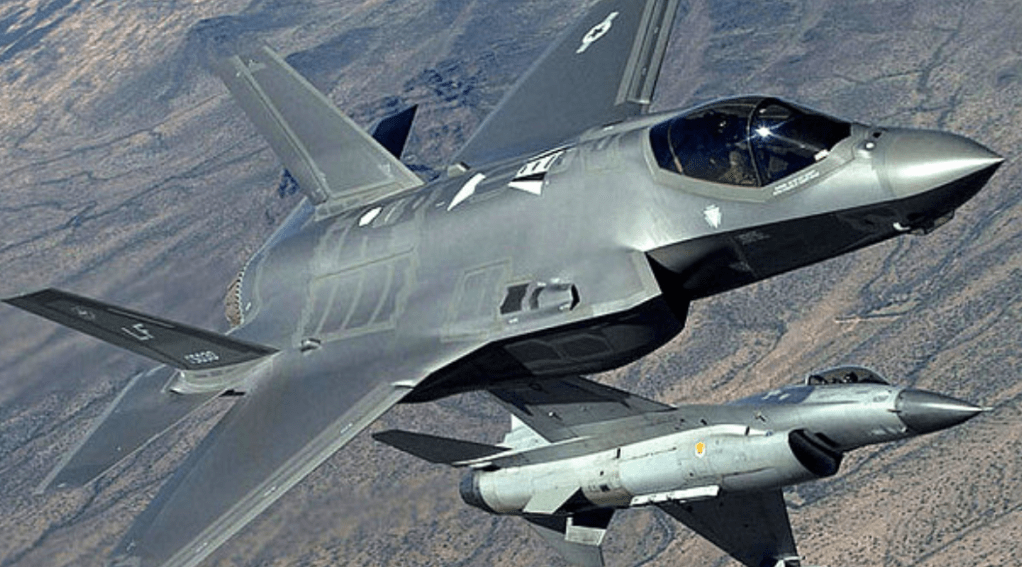
The aim of the test was to demonstrate the ability of the F-35 to fly to the edge of its restricted test limits without exceeding them. The test scenario was apparently successful as it allowed the aircraft be cleared for greater agility in future tests.
“It [the F-35 in question] is not equipped with the weapons or software that allow the F-35 pilot to turn, aim a weapon with the helmet, and fire at an enemy without having to point the airplane at its target.”
Test pilots say the additional maneuverability available as the aircraft expands its flight envelope after every test is a testament to the performance.
According to test pilot David “Doc” Nelson.
“Pilots really like maneuverability, and the fact that the aircraft recovers so well from a departure allows us to say [to the designers of the flight control system laws], ‘you don’t have to clamp down so tight’.”
Despite the claims that the F-35 is inferior to a decades old aircraft, previous exercises tell a different story. Over the last few years there have been occasions where a flight of F-35’s have engaged a flight of F-16’s in simulated combat scenarios, the F-35s reportedly won each of those encounters because of their sensors and low visibility.
This seems to be a case of comparing a test aircraft still in trials, that has a restricted flight envelope, against a mature dogfighter with no such restrictions.
Recently, a Royal Norwegian Air Force pilot responded to the now largely refuted headlines relating to the F-16 and F-35.
Major Morten ‘Dolby’ Hanche has flown many mock dogfights since becoming the nation’s first F-35 pilot last November.
In his blog, Hanche remarks:
“So how does the the F-35 behave in a dogfight? The offensive role feels somewhat different from what I am used to with the F-16. In the F-16, I had to be more patient than in the F-35, before pointing my nose at my opponent to employ weapons; pointing my nose and employing, before being safely established in the control position, would often lead to a role reversal, where the offensive became the defensive part.
When I push the stick forward; the F-35 reacts immediately, and not delayed like the F-16.”
He added
“The F-35 provides me as a pilot greater authority to point the nose of the airplane where I desire. (The F-35 is capable of significantly higher Angle of Attack (AOA) than the F-16. Angle of Attack describes the angle between the longitudinal axis of the plane – where nose is pointing – and where the aircraft is actually heading – the vector).
This improved ability to point at my opponent enables me to deliver weapons earlier than I am used to with the F-16, it forces my opponent to react even more defensively, and it gives me the ability to reduce the airspeed quicker than in the F-16.”



 Military News Today
Leave a comment