Shoppers are already feeling the effects of the events going on in the Red Sea and it could be set to get worse with escalating attacks by the Houthis and the US & UK missile attacks on the Houthis in Yemen over night.
From your Amazon delivery, to food on the supermarket shelves, to fashion, to IKEA, all are being effected and things could be set to get worse for the foreseeable future with the effects from the war in Gaza spill out across the region.
In a small patch of the ocean in the Middle East, trouble is brewing – and for one tea company halfway across the world in Reading, it’s a real cause for concern.
Products are out of stock and customers are increasingly frustrated at delays to their orders.

The cause is attacks by a group of Yemeni rebels, the Houthis, who oppose US and Israeli influence in the Middle East and a result, support Hamas in its war against Israel.
In a show of support for Hamas, they have been targeting commercial cargo ships traveling along one of the world’s busiest shipping lanes: the Red Sea.
Overnight on 11 January, the US and UK launched strikes on Houthi targets in Yemen after the Iranian backed group defied warnings to stop targeting ships in the Red Sea.
Tea People, an award-winning fine tea social enterprise, were expecting a delivery on 13 December, but it had to be rerouted an extra 3,500 miles and barely arrived in time for the Christmas trade. Another shipment should have arrived on 15 December but has still not made it to a UK port.

Vishaka Chhetri Agarwal, chief product officer, said their costs have increased four-fold too: “For a container if you paid $1,000 to ship it from Sri Lanka to the UK, all of a sudden we have to now pay $5,000.”
And while they are trying to absorb the price increase, “if this continues for much longer, then yes we will have to increase costs”.
But it is not just Tea People who have been affected, UK consumers face a host of delays to their everyday items due to the conflict in the Red Sea.
UK retailer ‘Next’ has warned that inventory levels are likely to be hit this year if maritime trade in the Red Sea continues to be obstructed by Yemen’s Iran-aligned Houthi militants.
In an interview with the Financial Times, Next chief Lord Simon Wolfson, the Conservative peer and longest-serving FTSE 100 CEO, said: “If [disruption] persists for a long period of time, I think it will mean that we don’t have the optimum level of stock, which will adversely impact sales.”
He added that shipping delays could push up the cost of freight, which may ultimately lead to higher prices. The attacks are putting pressure on supply chains, with about 12 per cent of global trade passing through the Red Sea, which is bookended by the Suez Canal to the north and the Bab-el-Mandeb strait to the south.
Since mid-November more than 10 transiting vessels have been attacked by militants. However, Wolfson insisted that difficulties with access to the Suez Canal were currently “an inconvenience, not a crisis”, and Next had plenty of stock in its warehouses and in stores. “We’re not going to suddenly go from having lots of stock in our shops to none,” he added. “Those stock levels might reduce by a couple of weeks, but it’s not going to leave us threadbare because of the nature of clothing retailers. We need to have quite a big stockholding at any one point in time.”
Global shipping has become a target during the war between Israel and Hamas which, like the Houthis, is backed by Iran.
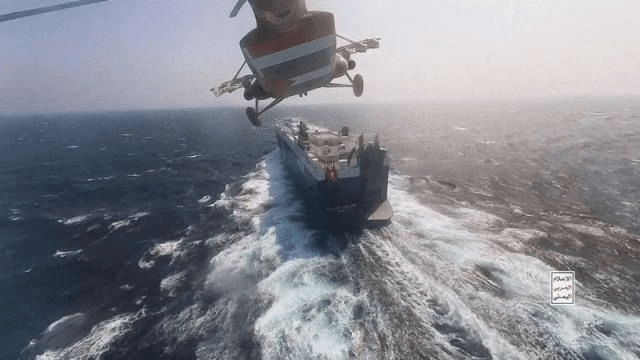
The dramatic hijacking of a cargo ship on 19 November marked one of the most significant attacks by Yemen’s Houthis in the Red Sea.
Since then, the Iran-aligned Houthis who control much of Yemen have launched drones and ballistic missiles at more than 20 ships. They said they are targeting vessels with Israeli links or those that are sailing to Israel.
John Stawpert, from the International Chamber of Shipping in an interview with Sky News said “What we’re seeing now is a threat that is incredibly generic and general to world trade.”
So far 47 incidents have been reported in the Red Sea & the Gulf of Aden between 19th November and 2nd January, according to maritime risk management group, Ambrey Analytics.
This includes the seizure of the Galaxy Leader, a Japanese operated cargo ship linked to an Israeli company, which the Houthis captured alongside its crew in the south of the Red Sea in November and has now become a tourist attraction in Yemen.

Twelve of the 47 reported incidents related to physical damage, according to Ambrey Analytics. While the attacks have been ongoing since November, their impact is also being felt politically.
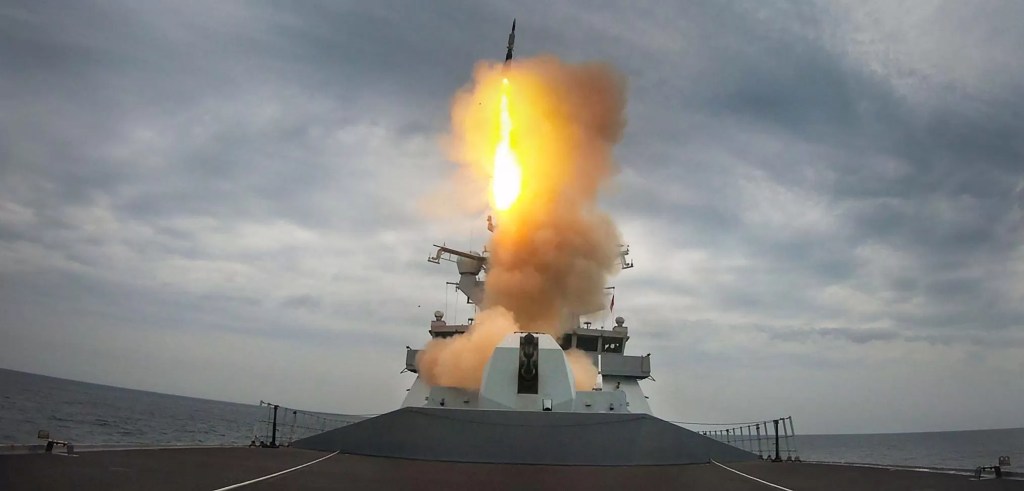
On 13th December, British warship HMS Diamond shot down an attack drone suspected of targeting commercial ships in the Red Sea. The Ministry of Defence said it was the first time in decades the Royal Navy had shot an aerial target in anger.
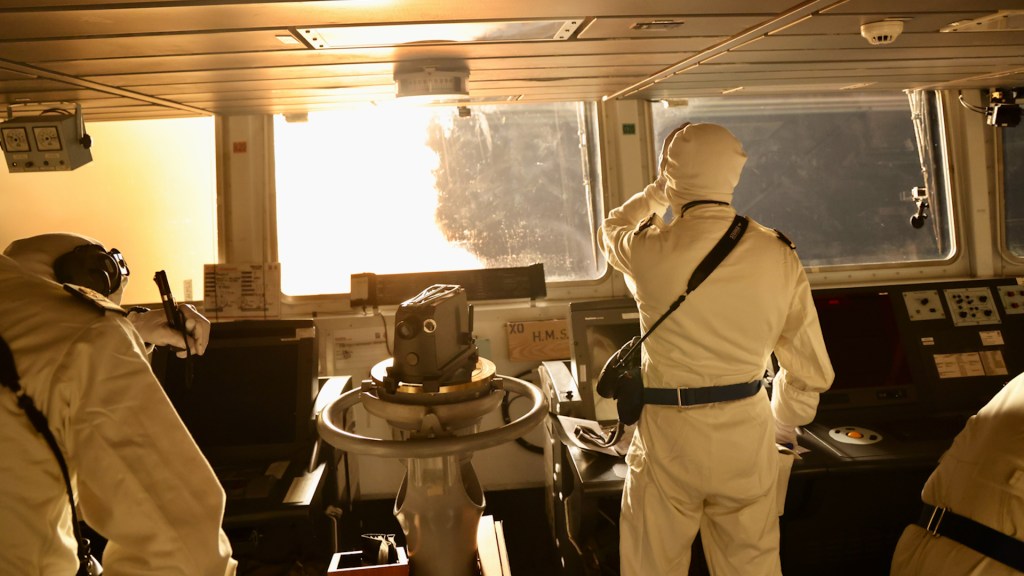
The US also repelled a Houthi attack on a Maersk container vessel in the Red Sea, sinking three ships and killing 10 militants on 31 December.
But the UK isn’t alone in its deterrence efforts. In December, a US warship shot down a further three drones.
In response, the US and 12 other countries including the UK formed a naval task force, Operation Prosperity Guardian, to protect civilian vessels.
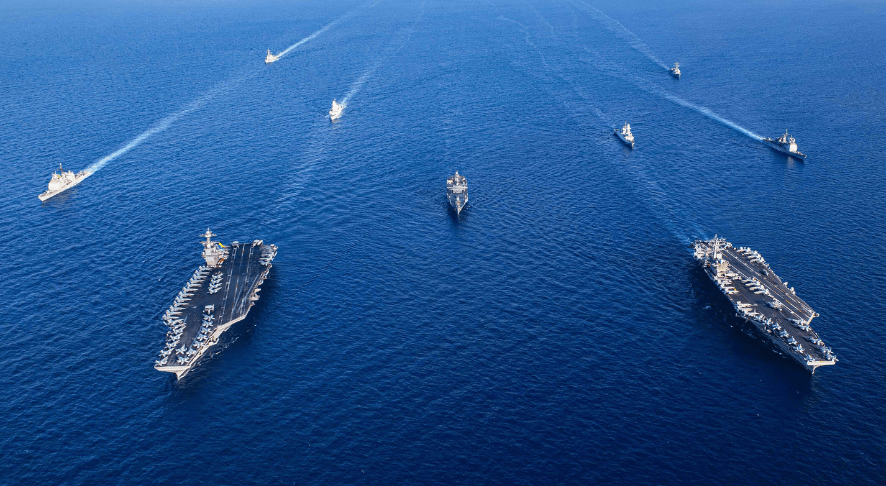
Overnight on 9th January, a Royal Navy warship shot down seven drones in an operation with US naval vessels and jets to repel the largest Houthi drone and missile attack to date.
The UK, US and other countries issued a warning to the group a week ago to end the targeting of commercial shipping or “bear the responsibility of the consequences”.
Goods being rerouted
The cost of rising tensions in the Red Sea is not just political, but commercial.
“The Houthis will bear the responsibility of the consequences should they continue to threaten lives, the global economy, and free flow of commerce in the region’s critical waterways,” the United Nations security council said in a statement on 1 December.
Next is among the latest retailers to warn stock could be delayed by the rising tensions in the stretch of water.
Next, BMW, Ikea, and Nestle are just a few brands thought to be impacted after several shipping firms – including Maersk and Hapag Lloyd have rerouted their cargo ships away from the Red Sea on the longer route around Africa.
Confirming delays to some of its products, IKEA said its main priority was “the safety of people working in the IKEA value chain” and it would take all the necessary precautions to keep them safe.

Around 12% of global, and 40% of Europe to Asia, trade passes through the Red Sea and Suez Canal.
Now shipping firms have rerouted via the Cape of Good Hope, a journey that takes an average of 10 days longer and costs around £1.6m more in fuel and other costs.
Around 300 ships have been rerouted so far, according to data from Windward, a maritime AI company, 45 of which were carrying approximately £79m each in new cars from Korea and Japan.
The company said approximately £3.55bn worth of new cars have been sent on the longer, more costly route, and found an average price increase for each individual car as a result to be £866.
Approximately 48% of Europe’s toys come through this route too, said Ami Daniel, Windward’s founder and CEO.
“The consumer goods are taking the biggest hit – and when I say consumer goods, these are your IKEA tables, your toys for your kids and everything you buy in the shop.”
Could trade stop using the Red Sea entirely?
Mr Stawpert, the International Chamber of Shipping’s senior manager for environment and trade, says there is a risk of “serious casualties”, but it is unlikely to turn into a scenario where no trade at all is using the route.
“Shipping is very, very resilient and we’ve faced lots of security threats before,” he said. “Shipping always manages to find a way through.”
But these larger commercial shipping containers are likely to be diverting because “big ships present a much more viable target than a lower free board ship like [an oil] tanker.”



 Military News Today
Leave a comment