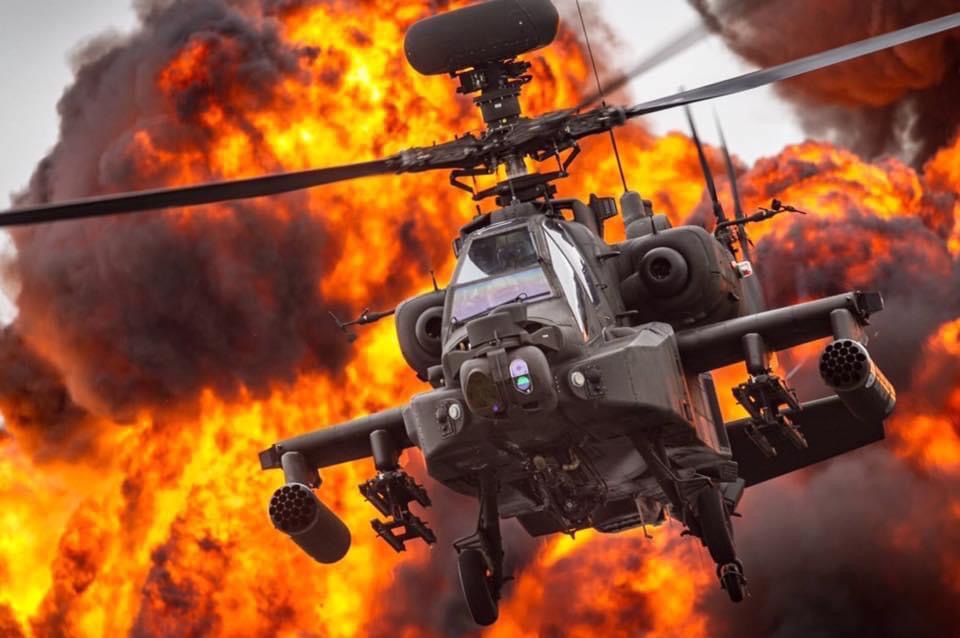
From the AH-64A in 1984 to today’s AH-64E, one thing about the Apache hasn’t changed is it’s reputation as the world’s most advanced and proven attack helicopter.
Combat Proven – Battle Tested
With more than 1,280 aircraft in operation accumulating over five million flight hours, 1.3million of which have been in combat, the AH-64 Apache represents the backbone of the US Army’s attack helicopter fleet and a growing number of international defence forces, including here in the UK with the British Army Air Corps.
With the AH-64E in production until at least 2028, the Apache will serve the US Army and its partner nations as the world’s primary attack helicopter into the 2060s. As Boeing and the US Army continue to invest in next generation technologies, the Apache brings affordable Modular Open Systems Architecture capability to serve as a centrepiece in the Multi-Domain Operations (MDO) battlefield for decades to come.
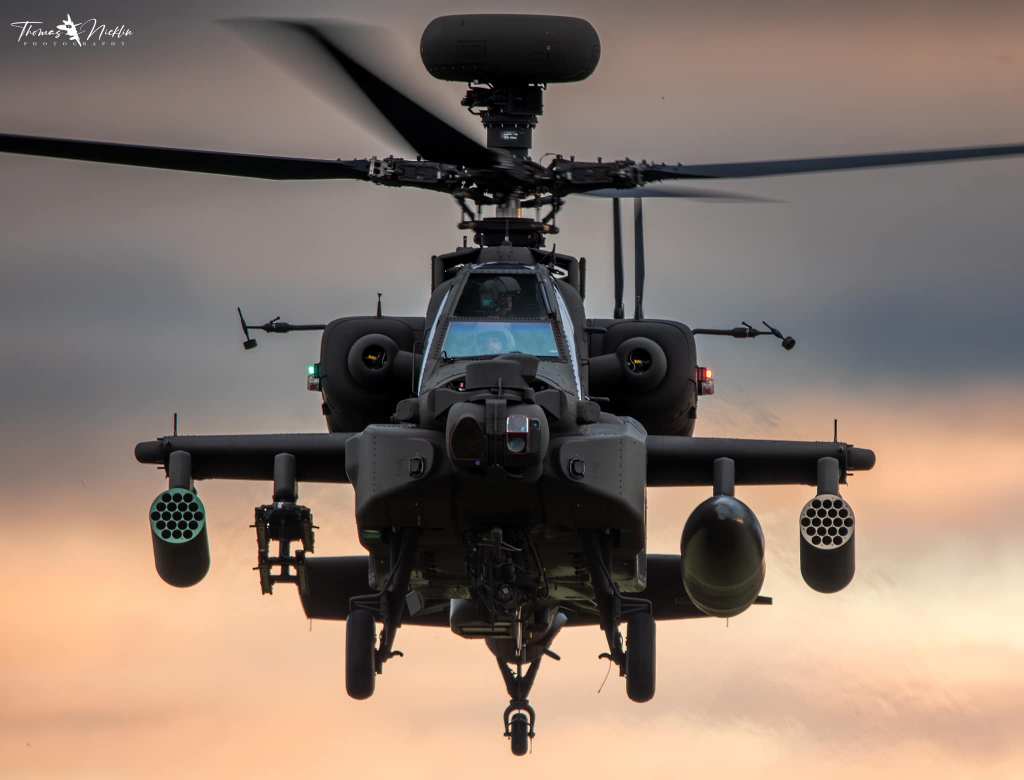
From the Proposals submitted by Bell, Boeing Vertol/Grumman team, Hughes, Lockheed, and Sikorsky. The US Department of Defence in July 1973 selected finalists Bell and Hughes Aircraft’s Toolco Aircraft Division (later Hughes Helicopters).
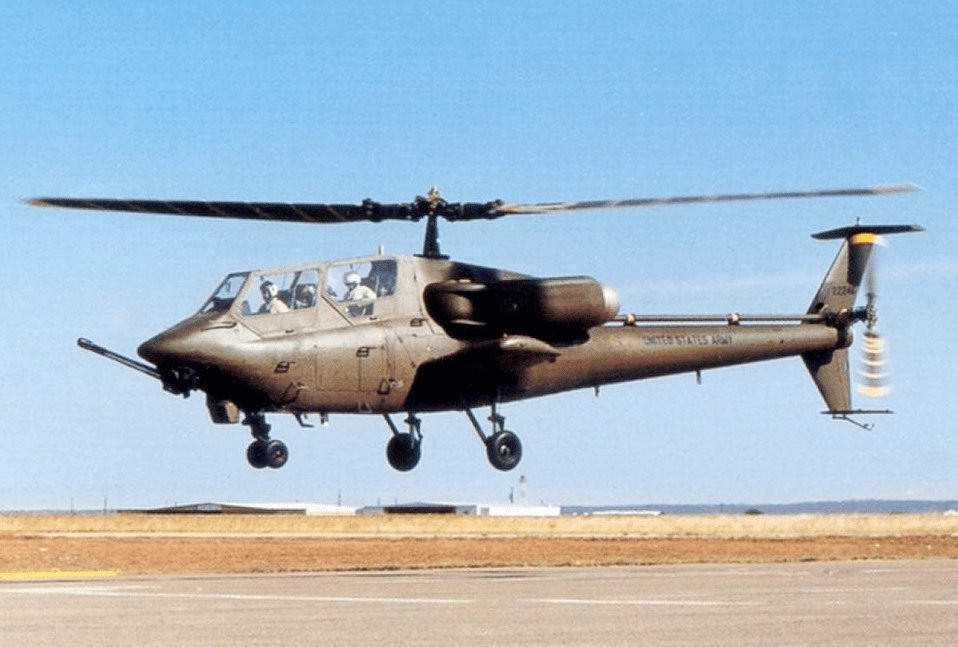
This began the phase 1 of the competition. Each company built prototype helicopters and went through a flight test program. Hughes’ Model 77/YAH-64A prototype first flew on 30th September 1975, while Bell’s Model 409/YAH-63A prototype first flew on 1st October 1975. After evaluating the test results, the Army selected Hughes’ YAH-64A over Bell’s YAH-63A in 1976.
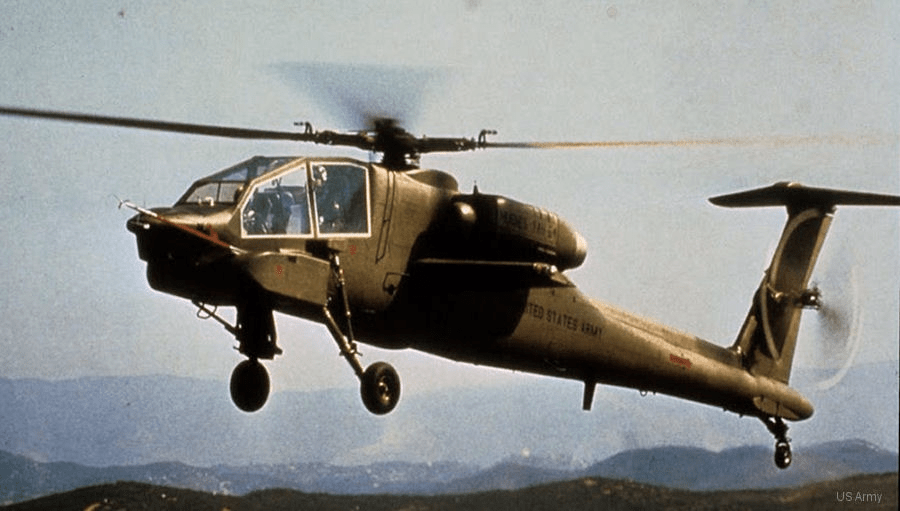
Reasons for selecting the YAH-64A included its more damage tolerant four-blade main rotor and the instability of the YAH-63’s tricycle landing gear arrangement.
The AH-64A then entered phase 2 of the AHH (Advanced Attack Helicopter) program, where three pre-production AH-64’s were built along with weapon sensor systems which were integrated and tested during this time, including the laser guided AGM-114 Hellfire missile which had already begun development in 1974.
In 1981, three pre-production AH-64As were handed over to the US Army for Operational Test II. The Army testing was successful, but afterward it was decided to upgrade to the more powerful T700-GE-701 version of engine, rated at 1,690shp (1260kW) Shaft Horsepower).
The AH-64 was named the Apache in late 1981, after the Apache tribe, following the tradition of naming Army helicopters after Native American tribes. It was approved for full-scale production in 1982.
In 1983, the first production helicopter was rolled out at Hughes Helicopter’s facility at Mesa, Arizona. Hughes Helicopters was purchased by McDonnell Douglas for $470million in 1984 (equivalent to $1,324,000,000 in 2022). The helicopter unit later became part of The Boeing Company with the merger of Boeing and McDonnell Douglas in August 1997. In 1986, the incremental or flyaway cost for the AH-64A was $7M and the average unit cost was approximately $13.9M based on total costs.
A 1985 Department of Defence engineering analysis by the inspector general’s office reported that significant design deficiencies still needed to be addressed by the contractor. The Army project manager Col. William H. Forster published a list of 101 action items. In 1986, the four 22-foot-long main rotor blades, each made from steel and composite material glued together to maximise strength and minimise weight by the Composite Structures Division of Alcoa Composites, were added to the list. The steel-composite rotors could not meet the Army specification for a life of 1500 flight hours, and needed replacement after just 146hours. After six changes to the design, the rotor blade life was extended to 1400 hours by early 1991.

Portions of the Apache are produced by various aerospace/defence industry companies. AugustaWestland has produced a number of components for the Apache for both the International & British Army’s Apache, and since 2004, the Korea Aerospace Industries has been the sole manufacturer of the Apache’s fuselage.
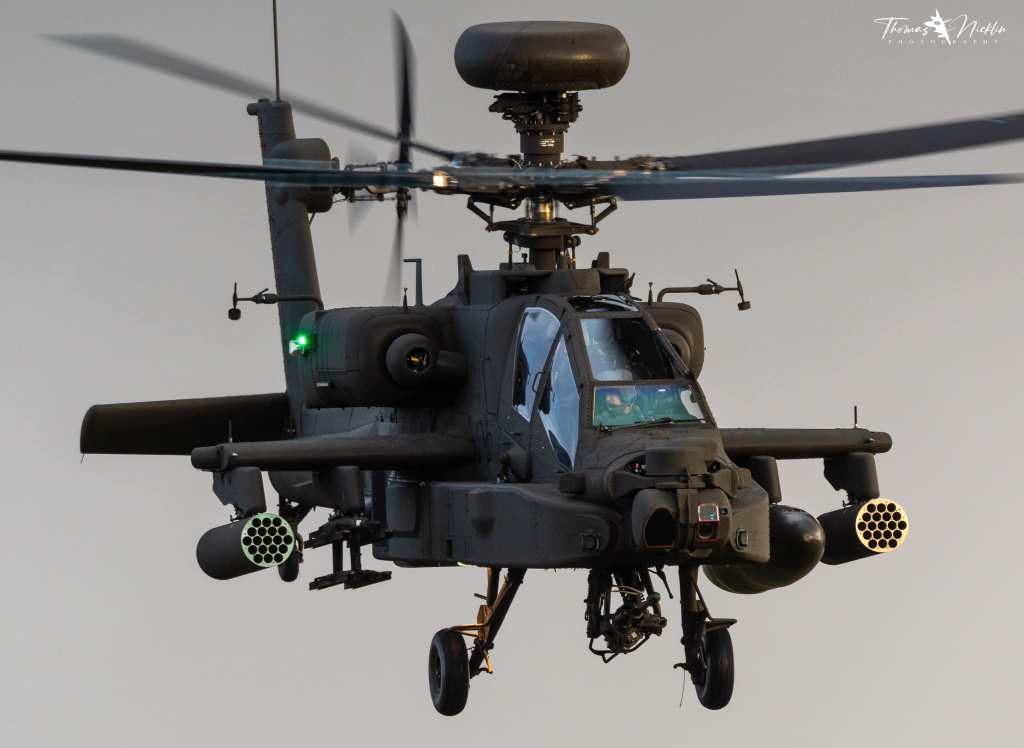
The AH-64E is the most modern configuration of the Apache and is ready for the MDO battlefield. A network-centric, fully integrated weapon system specifically built to dominate in highly contested and complex battle space, the AH-64E Version 6, or v6, Apache includes multiple enhancements to the aircraft’s sensors, software and weapons performance.
Designed for interoperability within the MDO ecosystem AH-64E v6 is a lethal, survivable and agile system providing the reach, manoeuvrability and performance needed by ground forces and contributes to current and future joint mission success.
By providing and integrating advanced capabilities through a layered effect of on board and off board sensors, stand-off long range weapons and the connectivity required to use all the tools the ecosystem can bring, Boeing’s AH-64E v6 is a fully integrated, optimised for battle attack helicopter that is truly in a class by itself.

The crew compartment and rotor blades are designed to sustain a hit from 23mm rounds. The airframe includes some 2500lb (1100kg) of protection and has a self-sealing fuel system to protect against ballistic projectiles. This compartment also incorporates a transparent blast shield between the pilot and gunner seats so that at least one crew member can survive in the event of a direct hit, but the canopy and windows are otherwise unrated against ballistic threats.
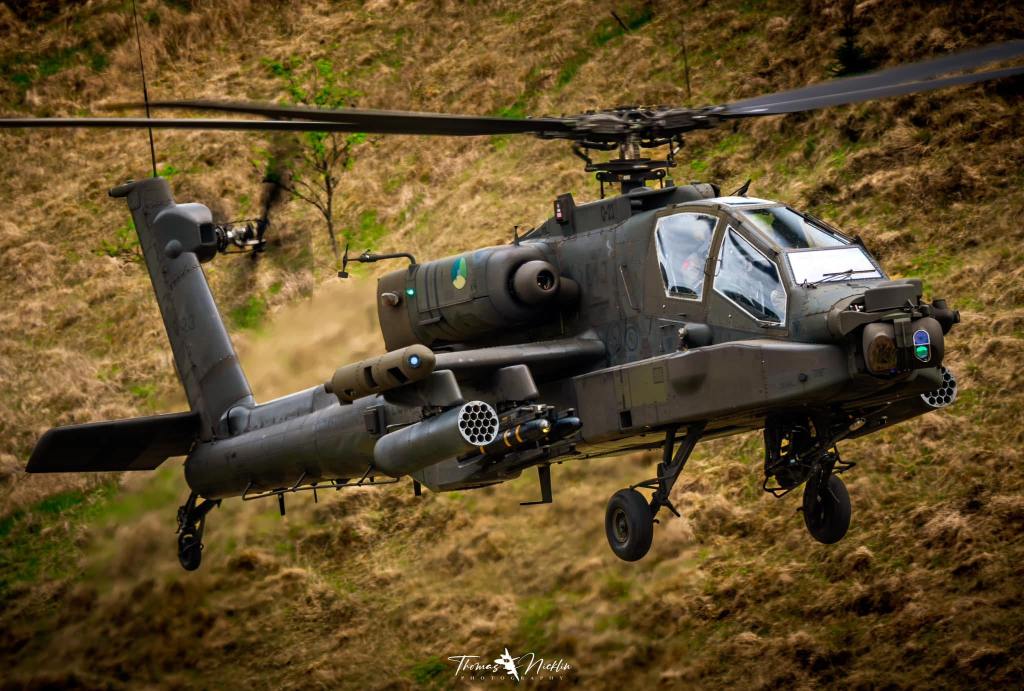
On a standard day, when temperatures are 15 °C, the AH-64 has a vertical rate of climb of 1775ft per minute (541m/min), and a service ceiling of 21000ft (6400m). However, on a hot day, when temperatures are 21 °C, its vertical rate of climb is reduced to 1595fpm (486m/min), and service ceiling is reduced to 19400ft (5900m) due to less dense air.
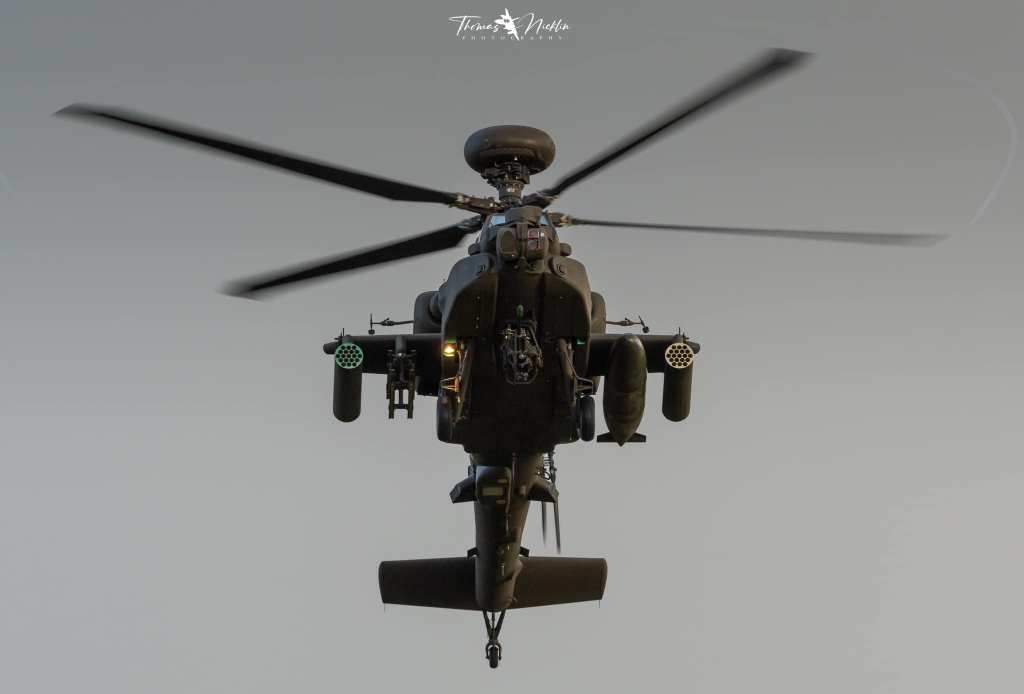
The AH-64 is adaptable to numerous different roles within its context as Close Combat Attack (CCA). In addition to the 30mm M230E1 Chain Gun, the Apache carries a range of external stores and weapons on its stub-wing pylons, typically a mixture of AGM-114 Hellfire anti-tank missiles, and Hydra 70 general-purpose unguided 70mm rockets. The Hellfire is designed to defeat stationary or moving tanks as far away as 6500metres.
Since 2005, the Hellfire missile outfitted with a thermobaric warhead is designated AGM-114N; this missile version is intended for use against ground forces and urban warfare operations. In October 2015, the US Army ordered its first batch of Advanced Precision Kill Weapon System (APKWS) guided 70mm rockets for the Apache.
Starting in the 1980s, the Stinger and AIM-9 Sidewinder air-to-air missiles and the AGM-122 Sidearm anti-radiation missile were evaluated for use upon the AH-64. The Stinger was initially selected; the US Army was also considering the Starstreak air-to-air missile. External fuel tanks can also be carried on the stub wings to increase range and mission time. The stub-wing pylons have mounting points for maintenance access; these mountings can also be used to secure personnel externally for emergency transport. Stinger missiles are often used on non-US Apaches, as foreign forces do not have as many air superiority aircraft to control the skies. The AH-64E initially lacked the ability to use the Stinger to make room for self-defence equipment, but the capability was added back following a South Korean demand.
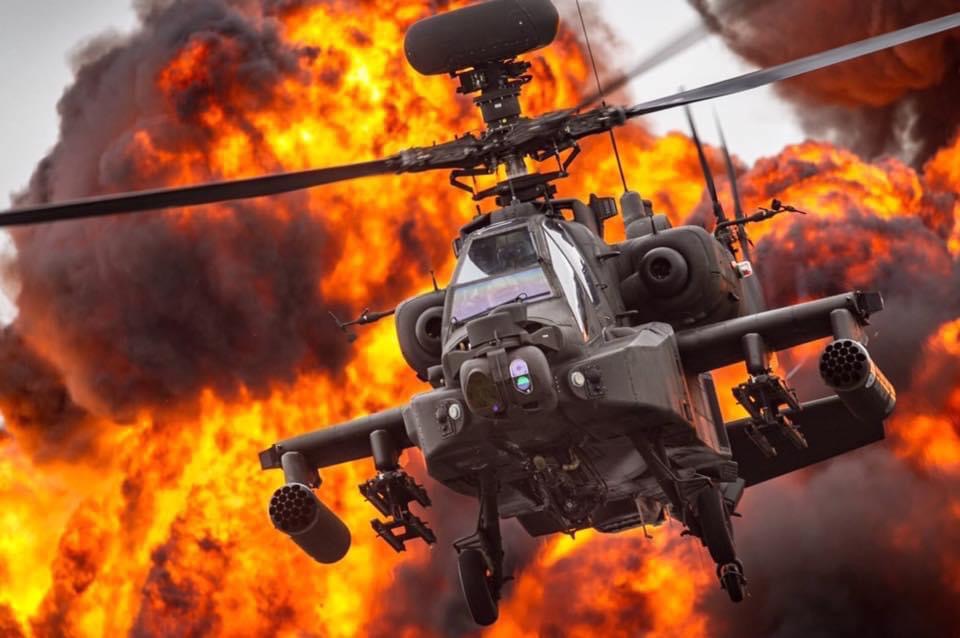
The Apache is by far not only the meanest, baddest looking war machine in the air, it’s the most advanced and combat proven attack helicopter in the world.



 Military News Today
Leave a comment