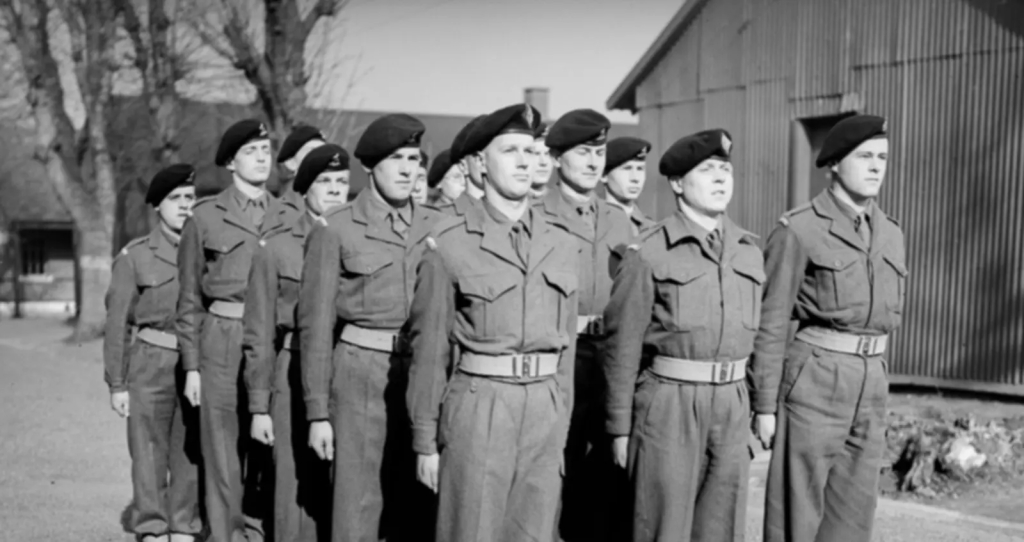
With the continuing war in Ukraine and the geopolitical landscape around the conflict, is it time to start thinking National Service?

To some a controversial thought, lets face it, we haven’t had National Service in the UK for over 60yrs…
If you had asked me during my time in the British Army, I would have stood fast with a strong ‘NO’… The idea of having a conscripted element to our armed forces, I felt would destroy the quality of our proud and revered military prowess. Across the globe, the British Army has been seen internationally one of the best army’s in the world, if not the best.

Why? In part we are a 100% volunteer army, we may not be the biggest, but we are considered one of the best trained armies in the world. Having been on exercise along side other countries armies, including the US, when talking to these soldiers, they truly felt we were a force to be reckoned with.
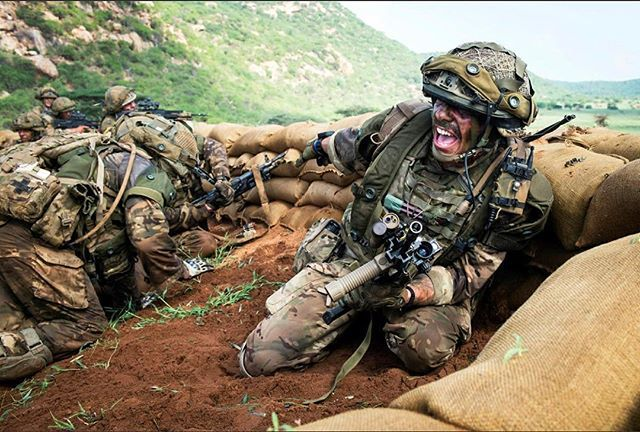
But in todays international political climate and Putin continuing to beat his chest at the West, my thinking has change. With three decades of suffering from a depletion in the size of not only our army, but our Air Force & Navy too.

Our armed forces were first hit during the 1990’s where the government at the time announced ‘Options for Change’ with this several army regiments were amalgamated and British ground forces in Europe were reduced from 55,000 to just 23,500. This also included mass redundancies, mainly amongst the most senior and experienced soldier within the army, particularly within infantry units, these were the Sergeant’s, C/Sgts, Warrant Officers, soldiers that each had between 10 and 20years experience.
Options for Change is something the British armed forces has never really recovered from, this with over a decade of recruitment issues, failing to inspire men and women to join has left the UK with a serious problem. If the Ukraine War was to spill over into a wider European War, many feel the UK armed forces are just not fit for purpose, not because to the men and women, but due to the lack of equipment, manpower and lack of investment in our armed forces.
There is also the subject of the government taking their eye off the ball close to home during two decades of fighting the war on terror in the Middle East. We shifted focus from a potential war in Europe to a thinking that the main threat was Islamic Extremism in the Middle East whilst getting relaxed around the potential threat from Russia. We even closed down the BAOR (British Army on the Rhine) as our government further reduced the strength of our armed forces.

So now with a military a sliver of what it was under Margret Thatcher, we are left with some serious thinking. And with this I have personally done a 180 on my feelings on National Service, and I’m not the only one, many in government and top ‘thinktank’ minds also think a National Service is the way forward in todays climate surrounding the Ukraine War.

Comments from top military officials about what could happen if NATO goes to war with Russia have made conscription feel closer than it has in generations. But what exactly is conscription, how has it worked in the past, and how is it different to a “citizen army”?
My personal thoughts are yes, bring in National Service for those 18yrs to 25yrs for a 3yr service. but not in the way of the past. During times of war, going back to WW1 & WW2, men conscripted into the military went to war, my problem with this is they are not volunteers, they don’t want to be in the army or any other part of our armed forces, let alone fight and potentially die for something you want no part in.
So my thoughts are to make National Service more of a Home Guard. When Battalions go off to war, some of the unit are left behind to take up guards and duties of the camp, leaving capable and highly trained and experience soldiers, having a National Service in reserve, we could task these to the camps of deployed units, freeing up fully trained experienced soldiers to be deployed that would normally be left behind to look after their camp.

My thoughts on National Service also I feel gives opportunity to train and educate young men and women in trades and skills that are deployable to civilian life, men and women in National Service could be trained in trades as Mechanics, Bricklaying, Electrical, Engineering, skills like this that even in civilian life are diminishing due to a lack of uptake across the country from young people wanting to get into these industries.
Those wanting University, can be enrolled into a National Service version of OTC (Officer Training Corps). This not wanting to put off university for 3yrs National Service could combine the two alongside each other just as OTC does today.

National Service needs to be something that is started now, we need trained military personnel now ready for any eventuality of a war with Russia and not be like we have been for so long with our armed forces being too reactive. Looking back to the beginning of the Iraq War, we sent our soldiers out in light armoured Land Rovers that we had used in Northern Ireland, these vehicles were not designed for war, and were no match for IED roadside bombs and anti-tank weaponry. Body armour given to our soldiers at the beginning of the Iraq war was also beyond a joke, again old equipment issued to soldiers in Northern Ireland with a couple of puny sized plates covering pretty much just the heart in the front and rear of the vest.
The Iraq War and then Afghan War led to a huge rethink and updating of all equipment, from body armour, comms equipment, clothing and military vehicles to protect our troops.
This time we need to be ‘Proactive’ and not as we have done so many times in the past at the cost of soldiers lives and be reactive.
Top military officials, not only within our armed forces, but across NATO are now thinking what could happen if NATO goes to war with Russia have made the possibility of being called up to fight feel closer than it has in generations.
General Sir Patrick Sanders, the outgoing head of the British Army, said such a conflict would need to be a “whole-of-nation undertaking”, which reignited a debate about defence cuts and volunteering to fight.

National Service I feel should not be automatically used as a fighting force from the word go if such a war with Russia did start. Leave them as I previously said as a rear support force in UK, looking after our camps to free up ‘main army’ to deploy, deploy ket National Service personnel such as engineers, REME trained conscripts to rear echelons to repair vehicles etc. Only to deploy to front line to fight as last resort. Deploy main fighting force ‘Main Army’ first, and deploy Army Reserves and as last resort, deploy National Service personnel to front line.

As I mentioned at the beginning of this blog, its been over 60yrs since the UK had conscription and National Service.
So what is conscription? Conscription legally requires certain members of the public to join the armed forces.
The British Government introduced conscription in January 1916 for 18months during World War One. Conscription during this time required all single men aged 18-41 to join up and be sent to the front line. There were exceptions for those who were seen to be medically unfit or if you had a trade that was more essential to the war effort back in the UK. A few months into the call up, married men were also added to the conscription.
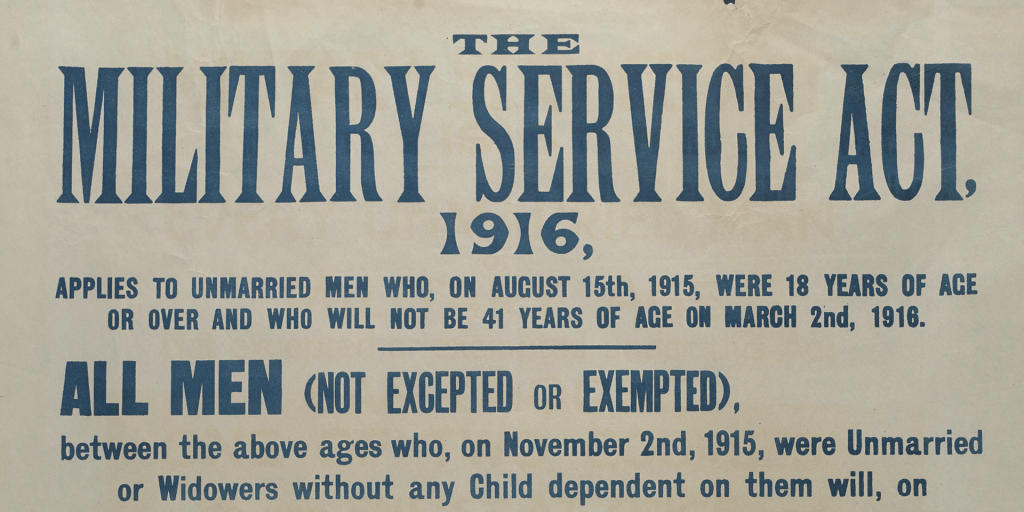
Although a necessary evil, conscription was very much needed, but wasn’t popular, more than 200,000 protested against it and approximately around 2.5million men joined through conscription, which lasted until 1920. Although the main conflict with Germany ended in 1918, conscription was extended to “enable the army to deal with continuing trouble spots in the Empire and parts of Europe”.

Here Sky News looks at how the UK has used conscription before, and what military experts and the government say about bringing it back.
Conscription returned in World War Two, adding about 1.5million people to the army, and was extended to women for the first time.
It started with “limited” conscription in May 1939 – as fears of another war in Europe grew – requiring single men aged 20 to 22 to sign up for military training. In September of the same year, when Britain declared war on Nazi Germany, the law was toughened and widened to men aged between 18 and 41.

Conscription applied to women – those who were unmarried and childless widows between the ages of 20 and 30 – from December 1941. At the same time, the age ranges for men were changed – requiring military service up until the age of 51 and some form of service until 60. This was driven by a shortage of men for roles in the police and other services during the war.
National Service & Conscription, isn’t something the Government, in particular the PM really want, but it is something many belive due to the geopolitics globally, particularly around the Ukraine War that will be inevitable however unpopular it will be. BUT likely no decision to enforce this will before the next election as likely would be a suicidal government policy leading into an election, so this will be the question that will seriously need to be made shortly after this years election, whoever be in power. BUT personally, I believe National Service needs to be put in place certainly within the next 18months, baring in mind, any conscript would not be trained and deployable within 6months of being called up.
Another possible suggestion for a conscript call up would be having a Territorial National Service alongside the Army Reserves, this would at least take the argument out that people would lose two or three years of their lives, delaying thing such as further education.

Military analyst Professor Michael Clarke told the Sky News Daily podcast the UK will probably have to go back to having a “citizen army” – but stressed this is “not the same as conscription”.
“It will need to be a citizen army, but a citizen volunteer army of the sort that we’ve had in the past, and we will probably have to have once again in the future,” he said.
The UK army has “almost never” had conscription during its more than 360-year history, he said, adding it was “completely antithetical to the British thinking on the military”.
But former UK Defence Secretary Michael Fallon told Sky News it was time to “think the unthinkable” and consider conscription.

Not that he was a fan of the idea: “Conscription to most professional soldiers, and I count myself as one, is absolute anathema,” he said.
“Britain’s armed forces have traditionally and culturally relied on long service, volunteer, highly professional soldiers with huge experience – and that is really the way we would all want it to go on.”
But given the current global situation and defence funding cuts since the end of the Cold War, he said it was time to “get over many of the cultural hang-ups and assumptions” and “look carefully” at conscription.
“Sooner or later, if the military can’t improve the way they recruit, then, if it comes to conflict, obviously they will have to look at other methods,” he added.
Much like former Defence Secretary Michael Fallon, I feel its time to think the unthinkable and accept that conscription in some form is now needed with a new ‘Cold War’ knocking at the border of NATO on the eastern flank of Western Europe.
What has the government said about conscription?
Any talk of the UK introducing conscription to the army if NATO goes to war with Russia is “nonsense”, the armed forces minister, James Heappey, has said.
Mr Heappey said the UK “long had plans” readied for “mobilising volunteers” in the event that Britain enters a new conflict but stressed that “nobody is thinking” about bringing back conscription.
Number 10 has also ruled out any suggestion conscription was under consideration, saying there were “no plans” to change the British military’s “proud tradition of being a voluntary force”.
What is a citizen army?
A citizen army is made up of volunteers from the public, rather than career soldiers.
At the beginning of the First World War, 750,000 men volunteered to join the British Army in just eight weeks.
The volunteers had to undergo a series of medical and fitness tests before being accepted as a soldier.
Admiral Lord West, the former head of the Royal Navy, said in an interview last week that the UK would have to “mobilise” in the event of a war between NATO and Russia, hinting citizen volunteers would likely be part of that.
What is the difference between conscription and national service?
National service was the standard peacetime form of conscription in the UK, introduced after the Second World War.
It came into force in January 1949 and required all men aged 17 to 21 to serve in one of the armed forces for an 18-month period.
It was discontinued in 1960, with the last servicemen discharged in 1963.
The UK’s political parties have debated whether or not to reintroduce some form of the service at a number of elections since the 1960s.
Often, calls to bring it back now focus on volunteering or public service for young adults, separate from the military.
Last year a ‘thinktank’ proposed a “Great British National Service” volunteering scheme that won the support of the leader of the House of Commons, Penny Mordaunt, and former Tory minister Rory Stewart.
It proposed a “civic” national service scheme for 16-year-olds that would see them complete a certain number of volunteering hours, although it would not be mandatory.

My only issue with some form of voluntary National Service in form of a national service scheme in public service just wouldn’t work! The youth of this country is not that of WW2, the young men and women of WW2 knew of the devastation of WW1, they had this in their memories, tens of thousand of young men flocked to the recruitment offices to volunteer to fight Nazi Germany, today we have Millennials and Gen Z, two generations of wetwipe entitled snowflakes who are often found marching the streets protesting war! These two generations wont volunteer, they will more likely want to kneel to Russia and surrender the shores of this once great nation that has not been invaded or conquered since 1066! Youth today are weak and don’t have the patriotism that generations have had in the past, our last patriotic generation is the sadly ageing Gen X, and we are in our 40s and 50s.
Gen Z and the millennials, not just from the UK, but across Europe are more likely to side with groups calling for ‘No Borders’ seen throughout the height of the refugee crisis in 2014-2015.
A legal conscription of some kind is the only option to have a nation trained enough to fend off Russia.
So What happens if you refuse conscription?
Well as we don’t have current conscription in the UK, but generally people who refuse conscription on moral grounds are referred to as conscientious objectors. They may object to fighting for political, religious or other reasons.
In the First and Second World Wars, conscientious objectors had to appear before a tribunal to argue their case.
If it was accepted, they may have been given a non-fighting role. If it was dismissed, they had to join up or risk being fined or jailed.
Whatever happens in the near future around conscription, the seriousness of the conversation has to be had NOW! And some form of National Service has to be in place within the next 2yrs along with a serious escalation of military stockpiles which have depleted over the two decades of war in Iraq & Afghan which was a very much different war to what would manifest in a European war as seen in Ukraine today and a depletion of munitions and equipment that nations across NATO have already given to Ukraine to defeat Russia.


 Military News Today
Leave a comment