
The United Kingdom Royal Air Force (RAF) boasts a modern, diversified fleet equipped with state-of-the-art aircraft, demonstrating the UK’s commitment to airpower and national defence. As of 2024, the RAF’s fleet consists of 21 different types of airplanes and helicopters for a myriad of operational requirements – from aerial refuelling and combat to training and transport. Today, we’re looking at the airplanes in the RAF’s fleet, as listed on the Royal Air Force’s official website.
Combat
The RAF currently operates two jet fighters for combat missions: the F35B Lightning and Typhoon FGR4.
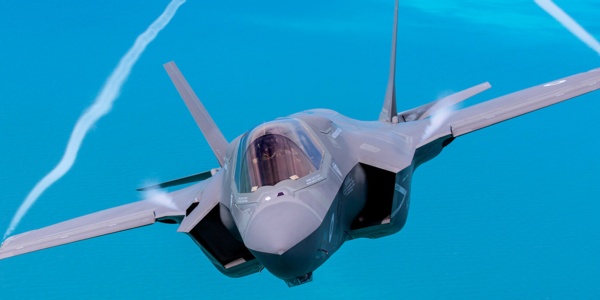
The Lightning integrates cutting-edge sensors and mission systems with its unique short take-off and vertical landing (STOVL) capability and advanced low-observable (stealth) technology, ensuring its ability to manoeuvre undetected in hostile airspace.

Its sophisticated and integrated sensors, complemented by robust data-linking capabilities, provide the pilot with a high level of situational awareness, allowing the pilot to not only share crucial information with other platforms through secure data links but also to employ weapons or electronic methods based on the gathered intelligence. The type is used for conducting air-to-surface, electronic warfare, intelligence gathering, and air-to-air missions – sometimes simultaneously.
The Lightning is operated alongside the Typhoon, a highly capable and remarkably agile multi-role combat aircraft suitable for diverse air operations encompassing air policing, peace support, and high-intensity conflict scenarios.
Initially designed for air-to-air missions as the Typhoon F.Mk 2, the aircraft has evolved into the formidable FGR4, boasting a potent precision multi-role capability. Pilots seamlessly execute crucial functions through the aircraft’s hands-on throttle and stick (HOTAS) interface, complemented by an advanced cockpit and the Helmet Equipment Assembly (HEA), positioning the Typhoon as exceptionally well-equipped for all facets of air operations.
While the Typhoon has effectively executed precision attack missions in all its combat deployments, its paramount role remains the provision of quick reaction alert (QRA) for safeguarding UK and Falkland Islands airspace. Additionally, detachments have been deployed to reinforce NATO air defense, notably in the Baltic and Black Sea regions.
ISTAR
There are four aircraft types in the RAF’s fleet dedicated to ISTAR (intelligence, surveillance, target acquisition, and reconnaissance). These are the Poseidon MRA1, RC-135W Rivet Joint, Reaper (MQ-9A), and Shadow R1.
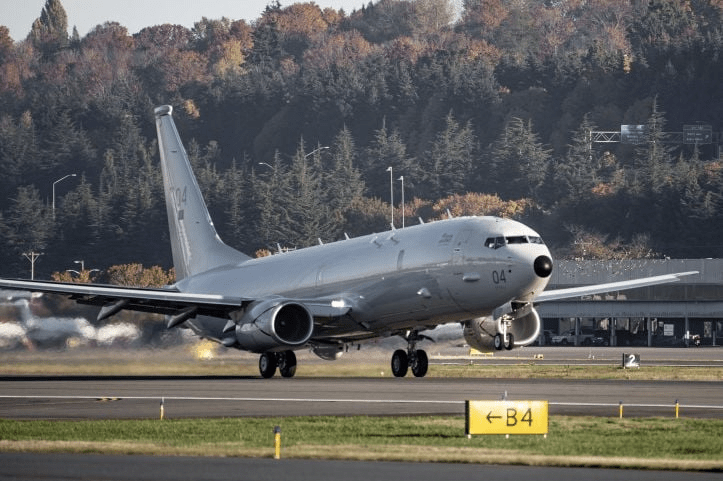
Boeing’s Poseidon MRA1 (P-8A) stands as a versatile maritime patrol aircraft designed for multi-role functionality, excelling in anti-submarine warfare, surveillance, and search and rescue missions. Its advanced mission system features an acoustic sensor system with passive and multi-static sonobuoys, an electro-optical/IR turret, and electronic support measures (ESM). This integrated equipment ensures extensive search and tracking capabilities. Additionally, the Poseidon is armed with torpedoes, enhancing its capacity to engage sub-surface targets effectively.

The RC-135W Rivet Joint serves as a specialised electronic surveillance aircraft capable of undertaking strategic and tactical missions across various theatres. Equipped with sensors, it effectively captures electronic emissions from communication systems and radar, among other sources. The aircraft is manned by skilled specialists, including Weapons System Officers (WSO) and Weapons System Operators (WSOp), tasked with surveying the electromagnetic spectrum. Their primary objective is to extract intelligence crucial for commanders, making the RC-135W Rivet Joint a valuable asset in information gathering.
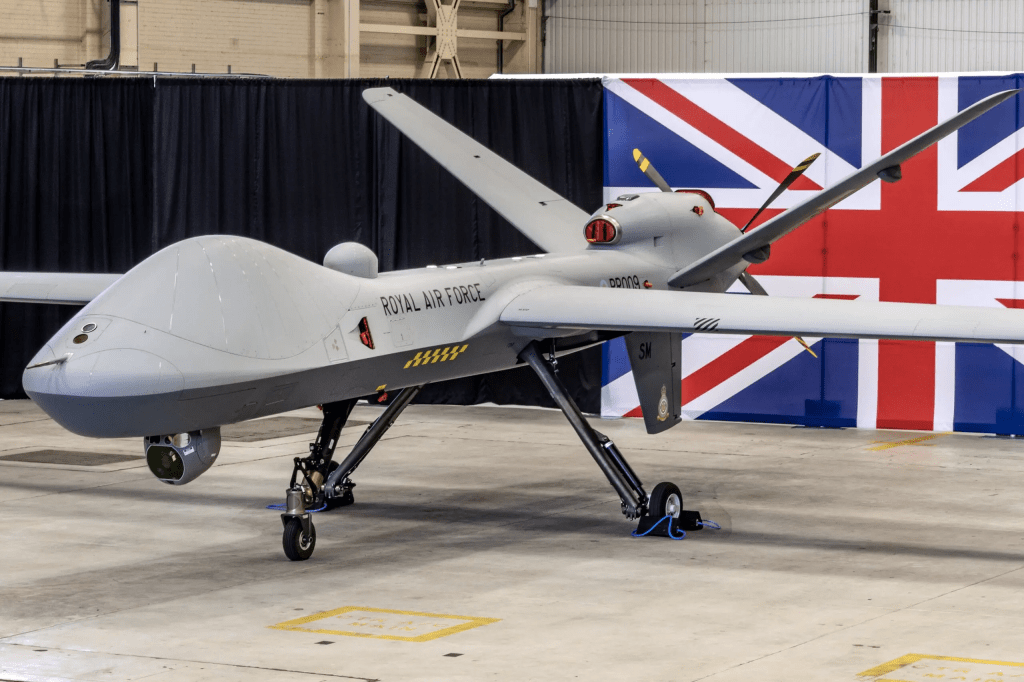
The MQ-9 Reaper, also known as Reaper MQ-9A, is an unmanned medium-altitude, long-endurance (MALE) aircraft that can be deployed for ISTAR as well as attack missions. Controlled by a crew of three comprising a pilot, sensor operator, and mission intelligence coordinator, the Reaper MQ-9A boasts over-the-horizon data link capability from bases in the UK and US. Renowned for its endurance and various surveillance sensors, the Reaper is a valuable addition to the RAF’s crewed platforms, enhancing persistence and broadening surveillance capabilities.
The Shadow RI utilises a combination of sensors to comprehensively gather intelligence for ground commanders. It features high-definition electro-optical and electronic sensors that complement other platforms, plus satellite communications links that facilitate real-time data download and off-boarding during missions. And that’s not all – the aircraft also has a defensive aids suite for enhanced security.
Training
The RAF uses six types of trainers, including the Viking T1, Prefect T1, Texan T1, Hawk T2, and Phenom T1.

To learn basic gliding techniques, RAF trainees are taught to fly the Grob G 103A Twin II Acro (known as the Viking T1 in service). Operated by nine Volunteer Gliding Squadrons, the Viking trains air cadets to a standard sufficient for solo flying.
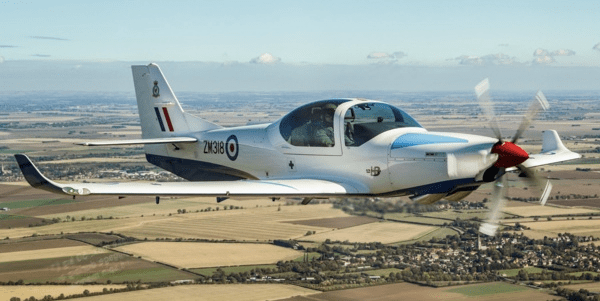
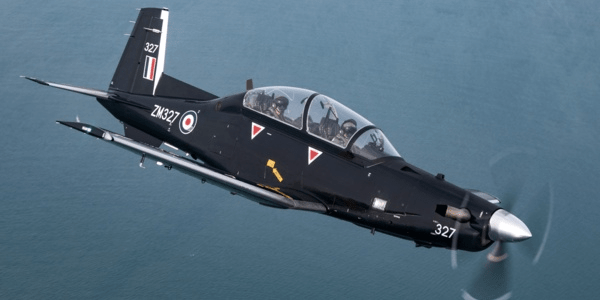
The Prefect combines turboprop power, digital avionics, and retractable undercarriage to offer elementary flying training. Skills learned from flying the Prefect allow trainees to move on to the Texan, a tandem-seat turboprop basic trainer featuring a glass cockpit. Its mission system can generate simulated air-to-air targets, preparing trainees to fly in real-world scenarios.
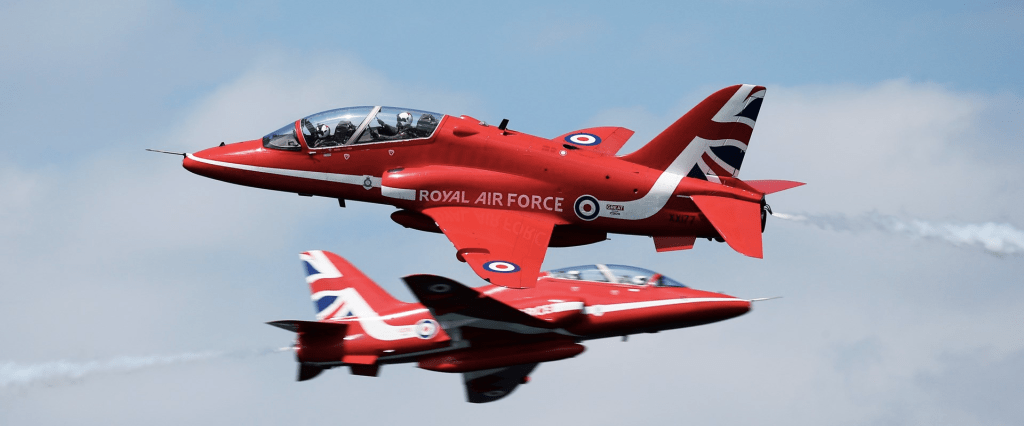
Following successful training on the Texan, students move on to the Hawk T2. This jet is a replacement for the Hawk T1 trainers (now in service with the Royal Air Force Aerobatic Team) and allows trainees to be immersed in more complex tactical environments – such as intercept training – with the simulations of many functions found in modern fighter jets.
To train for multi-engine aircrew duties, the RAF employs the Embraer Phenom 100. Featuring a touchscreen cockpit and an extensive suite for navigation, communications, and flight safety, the Phenom 100 represents a significant advancement in multi-engine flight training. Both in capability and cockpit layout, it brings trainees much closer to the features found in frontline aircraft types, such as the Atlas (more on this below).
Transport
The Atlas C.1 (A400M), Globemaster (C-17), Envoy IV CCI, and Voyager comprise the RAF’s transport fleet.
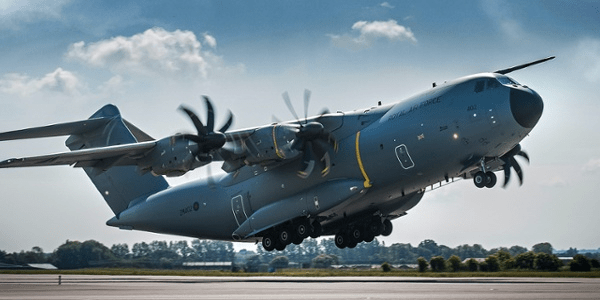
The Atlas conducts tactical airlift missions and provides strategic oversize lift capabilities. It can carry a 37-tonne (81,571 lbs) payload – including 116 fully-equipped troops, vehicles, and helicopters – over 2,000 nautical miles (2,301 miles / 3,704km), catering to both established and remote airfields (including short unprepared strips).

Another capable transport aircraft in the RAF fleet is the C-17 Globemaster III. Its ability to transport 100,000 lbs (45,360 kg) of payload across impressive distances up to 4,500 nautical miles (5,178 miles / 8,334 km) makes the C-17 an essential workhorse. Furthermore, it can land on short runways that measure as little as 3,500 feet (914 meters) long and just 90 feet (27 meters) wide.
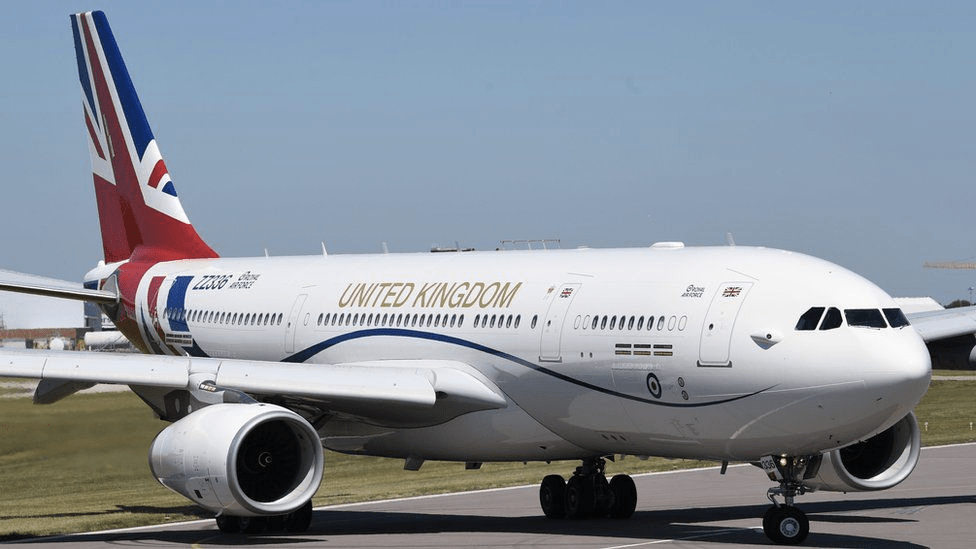
For the transport of high-priority and critical personnel and freight, the Dassault 900LX (known as Envoy IV CC Mk1 in service) business jet is used. This aircraft type ensures secure, timely, and discreet transport.
Lastly, the RAF also operates the Voyager as part of its air transport fleet. Serving as the Air Force’s only air-to-air refuelling (AAR) tanker, the jet also doubles as strategic air transport. The aircraft is operated as Voyager KC.Mk 2, which features underwing pods for jet refuelling, and the Voyager KC.Mk 3, which is equipped with an extra centreline hose for larger aircraft.



 Military News Today
Leave a comment