
Exercise Cambrian Patrol is the premier patrolling event of the British Army which is held in Wales and hosted by Headquarters 160th (Welsh) Brigade.
The Cambrian Patrol is an arduous annual international military exercise, covering 65km (40miles) set within the rugged Cambrian Mountains of Wales organised by the British Army, and considered one of the toughest Military Exercises in the world. This annual exercise that as well as the 65km that needs to be covered by each team carrying kit weighing around 40kg, involves multiple tasks that test the soldiers skills that they need on todays battlefield. These tasks can include use of drones, water crossings, battlefield casualty drills, countering explosive ordnance, counter-chemical, biological, radiological and nuclear drills more commonly known as CBRN, leadership, close combat and even media handling.
The Cambrian Patrol was first set up in August 1959 by Major General Lewis Pugh DSO, and included a long distance 120km march, ending with a shooting match on Sennybridge Training Area (SENTA).
During the 60s and 70s, the exercise was largely a march and shoot competition over 4days. Each patrol team had a base camp party that put up tentage/basha’s and even a cook tent for the end of each day. In the 80s the patrol transformed to a tactical patrol format and has continued to evolve to test soldiers for modern day conflict and the challenges faced by todays soldiers.
The event is open to units from all three services, the British Army, Royal Navy and Royal Air Force, both Regular and Reserve (Inc. UOTC), as well as international armed forces who also take part from countries including the United States, Pakistan, Mexico, Ireland, New Zealand, Australia, Spain and France. Past years has seen military teams from Serbia, Philippines, the UAE, Armenia, Moldova, Brazil and many more.
The competition consists of teams of eight men or women patrolling across difficult terrain. It’s a test of leadership, self-discipline, courage, physical endurance and determination. In 2014, an all women patrol team representing the London University Officer Training Corps (UOTC) made history by becoming the first all women team to win a Bronze Medal.
The exercise usually starts with teams arriving at a rendezvous before having their equipment checked to make sure they have everything required. Missing equipment will be replaced by dead weight and will mean points will be deducted. From there the team leader will be taken to orders while the rest of the team set up a quick hide, start their battle prep and prepare to receive orders i.e. prepare a model of the ground which will be covered during the patrol. Many of the teams that enter do not finish, those that do complete the Cambrian Patrol earn one of four distinctions; gold medal, silver medal, bronze medal, or passing
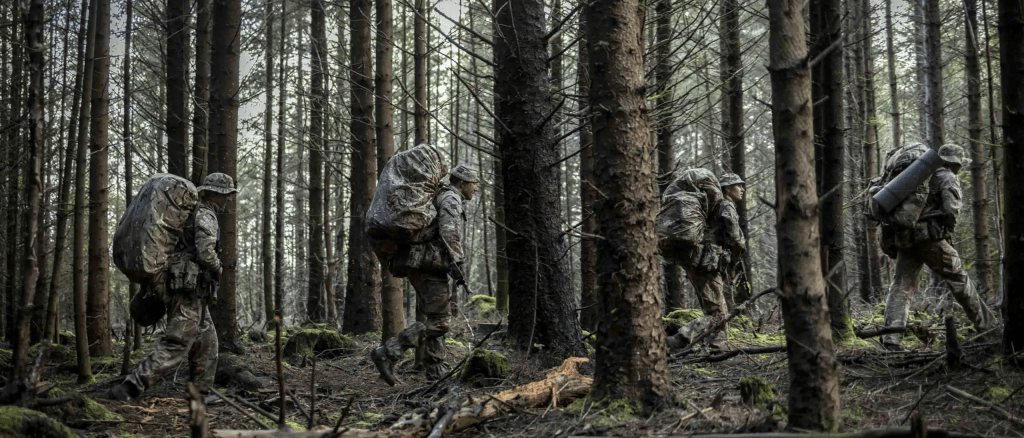
The dates for Exercise Cambrian Patrol 2025 (CP25) are 3 to 12 October 2025.
The Cambrian Patrol
The aim of CP25 is to provide a challenging World Class patrol exercise in order to enhance Operational Capability.
Patrol Overview
The Cambrian Patrol is run on an annual basis with applications accepted from all three Services (Regular and Reserve Forces), and overseas military units.
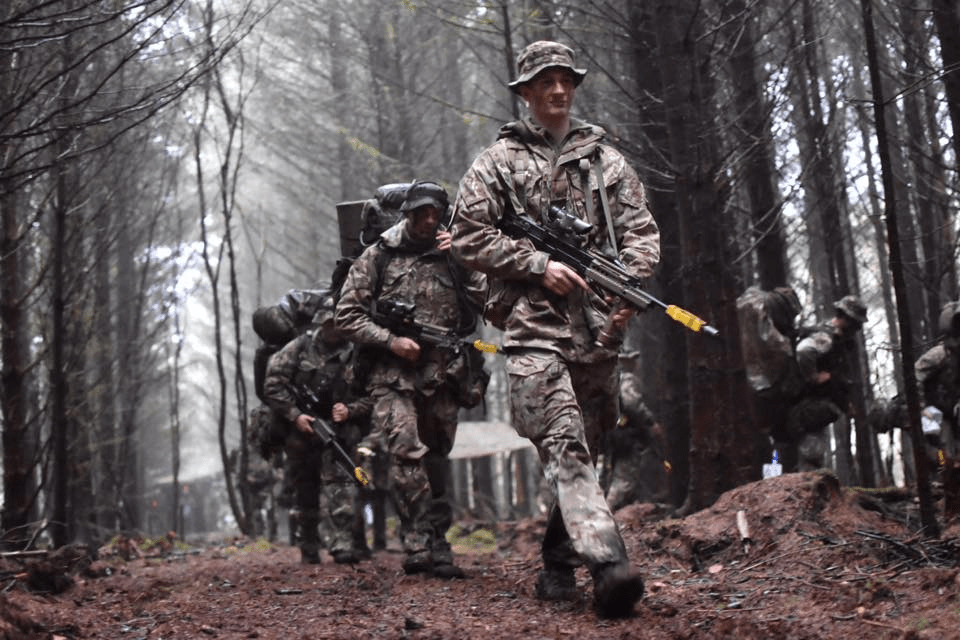
The event has evolved into a cost effective, ready-made exercise that Commanding Officers can use to confirm the basic training standards of their soldiers, in preparation for future operations. It is mission focused and scenario-based with role players used to enhance the training benefit. We seek to encourage a wider participation from across all the arms and services and stress that the entry standards are not based on any specialist skills but on Battlecraft Syllabus (BCS) and Individual Training Requirement (ITR), in addition to physical and mental robustness and leadership.

Patrol Composition
Each patrol must have a support team comprising a non-participating patrol manager of at least the rank of Senior Non Commissioned Officer (SNCO) and a driver. There are no BCRs during the patrol. The composition of the patrol is to be (international patrol manning configuration will be based on each countries procedures):
- Patrol Commander: SNCO / Warrant Officer (WO) (OR6-OR9) / Officer (OF1-OF2)
- Patrol Second In Command: Junior Non Commissioned Officer (JNCO) (OR3-4)
- Patrol Members: Six Private soldiers (OR1-2), this group may include at least one JNCO (OR3-4)
However, specialised units and international patrol composition will be considered on a case by case basis.
Assessment Criteria
Assessment commences at the drop off point and continues throughout until completion of the exercise. The military skills that may be assessed are:
- Artillery Target and Emergency Close Air Support Procedures
- Battlefield Casualty Drills (BCD/BLS)
- Countering the Explosive Ordnance Threat (C-EO)
- Counter–Chemical, Biological, Radiological and Nuclear Drills (C-CBRN)
- Dismounted Close Combat Skills
- Leadership
- Media Handling and Civil Engagement
- Observation and Reconnaissance of an enemy position
- Obstacle Crossing Drills
- Operational Law and Ethical Behaviour
- Orders Procedure
- Partner force assistance and mentoring
- Patrol Reporting and Radio Communications
- Physical and Mental Robustness
- Recognition of friendly and enemy aircraft, vehicles, weapons, and equipment
- Tactical conduct and Fieldcraft
Standards
Participating patrols that complete CP25 will earn an award in one of the following categories:
- Gold: 75% or more of total available points and no less than 65% on any single assessed task.
- Silver: 65 – 74% of total available points and no less than 55% on any single assessed task.
- Bronze: 55 – 64% of total available points.
- Coin: Completed the event and scored less than 55% of total available points.



 Military News Today
Leave a comment